Why You Need a Workers' Compensation Lawyer in Savannah
Savannah, Georgia, is a city vibrant with economic activity, historical charm, and a bustling port that serves as a cornerstone of the state's economy. From the massive container ships docking at the Port of Savannah to the constant hum of construction reshaping its skyline, and the ever-present hospitality industry catering to millions of tourists, opportunities abound. However, this very dynamism brings with it an inherent risk of workplace injuries. With a growing population exceeding 140,000 residents and a continuous influx of commuters and visitors, our city's roads and workplaces are often crowded and fast-paced, creating conditions ripe for accidents.
Consider the diverse workforce of Savannah: longshoremen and dockworkers navigating complex machinery at the Georgia Ports Authority, construction workers building new commercial and residential properties, manufacturing employees at facilities like Gulfstream Aerospace or JCB, hospitality staff in historic hotels and restaurants, and countless delivery drivers traversing the city's intricate street grid. Each profession, while essential to Savannah's prosperity, carries its own set of occupational hazards. A misstep on a construction site, a heavy load dropped at the port, a slip-and-fall in a busy kitchen, or even a vehicle accident while on company business – these incidents can lead to devastating injuries, profound financial hardship, and a future clouded by uncertainty.
Navigating the aftermath of a workplace injury can be an overwhelming ordeal. You're not just dealing with physical pain and emotional distress; you're also facing mounting medical bills, lost wages, and the daunting prospect of interacting with your employer's workers' compensation insurance carrier. These insurers, while ostensibly there to help, are ultimately businesses focused on minimizing payouts. They often employ tactics designed to deny, delay, or devalue your claim, leaving you feeling isolated and powerless. They might question the severity of your injuries, dispute the cause of the accident, or pressure you into accepting a lowball settlement that doesn't adequately cover your long-term needs.
This is precisely where the expertise of a dedicated Savannah workers' compensation lawyer becomes indispensable. At AccidentLegalForce.com, we understand the intricate web of Georgia workers' compensation laws and the common strategies employed by insurance companies. We know the local landscape – from the specific industries that dominate Savannah's economy to the judicial climate of Chatham County courts. Our role is to act as your shield and your sword, protecting your rights, ensuring you receive proper medical care, and fighting relentlessly to secure the maximum compensation you deserve. Without legal representation, injured workers in Savannah often find themselves at a significant disadvantage, struggling to access the benefits they are rightfully owed under Georgia law. Let us handle the legal complexities so you can focus on your recovery and rebuilding your life.
Most Dangerous Roads and Intersections in Savannah, GA
Savannah's unique geography, combined with its status as a major port city and tourist destination, contributes to a complex and often perilous road network. The sheer volume of traffic, including a significant presence of heavy commercial vehicles, tour buses, and unfamiliar drivers, creates numerous hot spots for accidents, many of which can involve employees traveling for work. Understanding these dangerous areas is crucial for all Savannah residents, especially those whose livelihoods involve regular road use.
Interstate 16 (I-16) serves as a critical artery connecting Savannah to Macon and points west. Its terminus in downtown Savannah, particularly the stretch leading to and from the Talmadge Memorial Bridge and the Port of Savannah, is notoriously congested. The rapid merging of port traffic, local commuters, and tourists often leads to sudden stops, rear-end collisions, and multi-vehicle pile-ups, especially during peak hours. Similarly, Interstate 95 (I-95), which bypasses Savannah to the west, sees a constant flow of interstate commerce and travelers. Accidents on I-95, particularly near its interchanges with I-16, US-80, and GA-204, are often high-speed and devastating, involving large tractor-trailers that can cause catastrophic damage and severe injuries to smaller vehicles.
Within the city itself, several major thoroughfares and their intersections consistently rank among the most dangerous. Abercorn Street (US-17/GA-204) is a prime example. As one of Savannah's longest and busiest commercial corridors, it's a magnet for accidents. The sheer number of traffic lights, shopping centers, and merging lanes creates a constant challenge for drivers. Intersections along Abercorn Street, such as those with White Bluff Road, Montgomery Cross Road, and DeRenne Avenue, are particularly hazardous due to high traffic volumes, complex turning movements, and frequent distracted driving incidents.
Victory Drive (US-80), stretching from the islands to the heart of Savannah, is another high-risk area. It’s a multi-lane road with a mix of commercial businesses, residential areas, and numerous cross streets. The intersections of Victory Drive with Waters Avenue, Skidaway Road, and East Broad Street are known for a high incidence of accidents, including T-bone collisions and pedestrian accidents, often exacerbated by drivers attempting to beat yellow lights or making unsafe lane changes.
Downtown Savannah, while charming, presents its own set of driving challenges. The narrow, one-way streets, coupled with heavy pedestrian and trolley traffic, require extreme caution. Bay Street, running parallel to the riverfront, and Martin Luther King Jr. Boulevard, a major north-south artery, are particularly dangerous. Accidents involving delivery vehicles, taxis, and ride-shares are common, often complicated by sudden stops, tight turns, and limited visibility. The intersection of Bay Street and Martin Luther King Jr. Boulevard is a high-volume area where traffic from the historic district clashes with commercial routes, leading to frequent fender-benders and more serious collisions.
For workers who spend their days on Savannah's roads – truck drivers, delivery personnel, sales representatives, and even employees commuting to and from work – these dangerous roads represent a daily risk. A workplace injury sustained in a vehicle accident on these routes, whether directly during work duties or as part of an employer-mandated commute, can be covered by workers' compensation. Understanding the specific dangers of Savannah's roads allows us to better anticipate the types of accidents and injuries our clients may face, and to build a strong case demonstrating how a work-related incident on one of these perilous routes led to their injuries.
Georgia Workers' Comp Laws: Statutes, Fault Rules and Deadlines
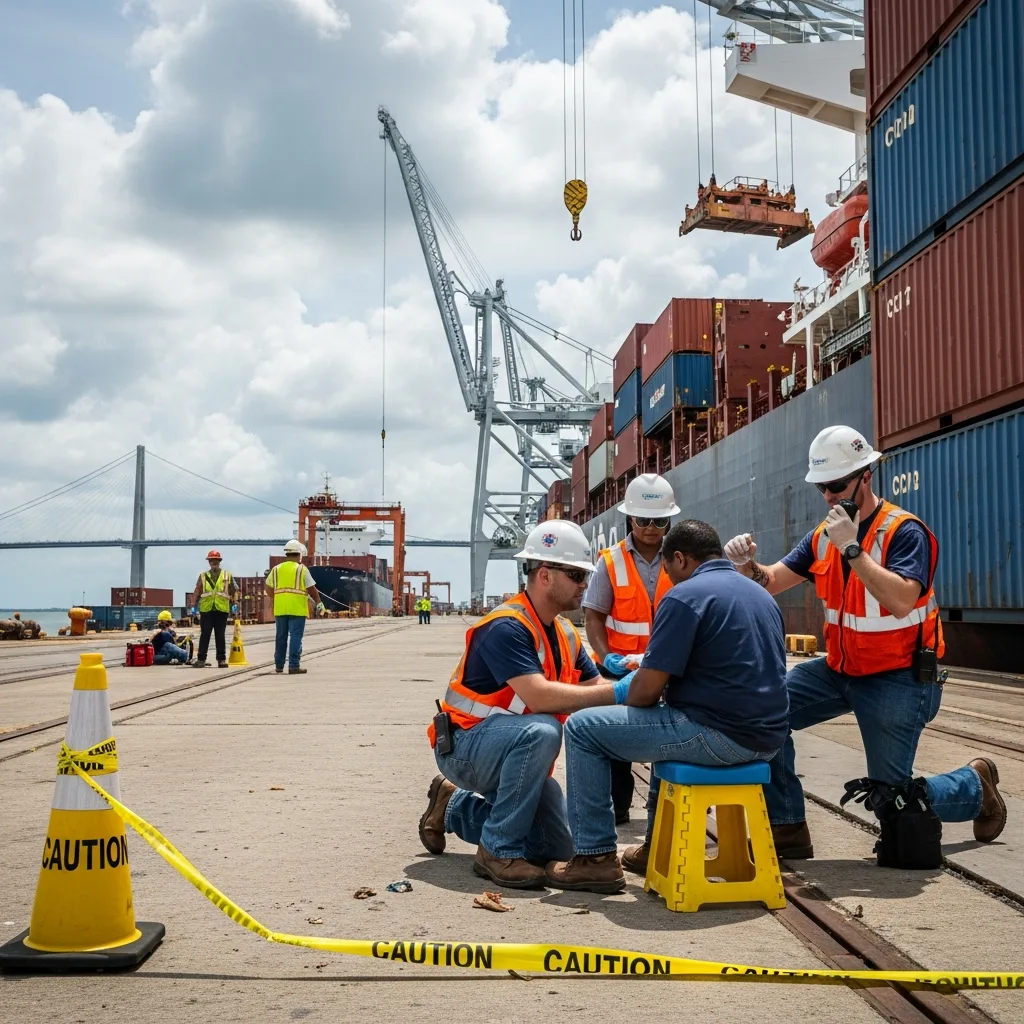
Understanding the legal framework governing workers' compensation in Georgia is paramount for any injured employee in Savannah. The Georgia Workers' Compensation Act, primarily found in Official Code of Georgia Annotated (O.C.G.A.) Title 34, Chapter 9, provides the comprehensive rules and regulations that dictate how claims are processed, what benefits are available, and the critical deadlines that must be observed. Unlike standard personal injury claims, workers' compensation operates under a no-fault system. This means that in most cases, it doesn't matter who was at fault for the accident – whether it was your employer's negligence, a co-worker's mistake, or even your own momentary lapse of judgment. If your injury occurred "in the course of and scope of employment," you are generally entitled to benefits.
There are, however, limited exceptions to this no-fault rule, primarily revolving around the employee's own actions. For instance, if your injury was solely caused by your intoxication from alcohol or illegal drugs, or by your willful misconduct (e.g., intentionally injuring yourself, committing a crime, or purposefully violating a known safety rule that directly caused the injury), your claim could be denied. These are high bars for employers and insurers to prove, and they often require the expertise of a seasoned workers' compensation attorney to challenge effectively. It's crucial to understand that the modified comparative fault rule, which applies to general personal injury claims in Georgia (where you can recover damages if you are less than 50% at fault), does not apply to workers' compensation claims regarding eligibility for benefits. Your eligibility for workers' comp benefits is not reduced by your percentage of fault.
The most critical aspect of Georgia workers' comp law involves the strict deadlines, also known as statutes of limitations, for reporting injuries and filing claims. Failure to meet these deadlines can result in the complete forfeiture of your rights to benefits, regardless of the severity of your injury.
- Reporting the Injury: You must report your workplace injury to your employer within 30 days of the accident or the date you became aware of the occupational disease. While 30 days is the legal maximum, it is always advisable to report the injury immediately, in writing, to ensure there is clear documentation.
- Filing Form WC-14: To officially initiate a claim for benefits with the Georgia State Board of Workers' Compensation, you must file a Form WC-14, also known as an "Original Claim for Benefits." The general deadline for filing this form is one year from the date of the accident.
- Medical Treatment Paid: If your employer or their insurer has paid for *any* authorized medical treatment related to your injury, you have one year from the date of that last payment to file a Form WC-14 to seek additional benefits.
- Weekly Income Benefits Paid: If you have received weekly income benefits (such as Temporary Total Disability or Temporary Partial Disability), you have two years from the date of the last payment of those benefits to file a Form WC-14 seeking a change in your benefits.
These deadlines can be complex and confusing, and missing even one can be catastrophic for your claim. The experienced legal team at AccidentLegalForce.com is adept at navigating these statutory requirements and ensuring all necessary forms are filed accurately and on time with the Georgia State Board of Workers' Compensation. We also understand the specific requirements for employers to carry workers' compensation insurance; generally, any employer with three or more employees is legally mandated to provide coverage, though there are special rules for agricultural employers and certain types of contractors. Don't risk losing your right to compensation due to a technicality; let our Savannah workers' compensation attorneys guide you through the intricate landscape of Georgia law.
Common Injuries from Workers' Comp Accidents in Savannah
Workplace accidents in Savannah, given the city's diverse industrial and service sectors, can result in a wide array of injuries, each carrying its own set of challenges regarding treatment, recovery, and long-term impact. From the docks of the port to bustling construction sites, manufacturing plants, and vibrant hospitality venues, the potential for serious harm is ever-present. Understanding the common types of injuries sustained by workers is crucial for anticipating medical needs, documenting claims, and ensuring appropriate compensation.
One of the most severe categories of injury is Traumatic Brain Injury (TBI). Falls from heights, impacts from falling objects, or even blunt force trauma from machinery accidents can lead to concussions, contusions, and more severe brain damage. The costs associated with TBI are astronomical, encompassing emergency care, neurological evaluations, cognitive therapy, and potentially lifelong assistance. The long-term impact can include impaired memory, concentration, mood swings, speech difficulties, and even personality changes, fundamentally altering a victim's ability to work and enjoy life.
Spinal Cord Injuries are another catastrophic outcome of workplace incidents. These can range from herniated or bulging discs in the neck or back, requiring extensive physical therapy and potentially surgical intervention, to more severe spinal cord damage resulting in partial or complete paralysis. The impact on a worker's life is profound, often leading to permanent disability, chronic pain, and a complete inability to return to their previous occupation. The cost of spinal surgeries, rehabilitation, assistive devices, and ongoing care can quickly reach hundreds of thousands, if not millions, of dollars.
Fractures are common across many Savannah industries. Construction workers might suffer broken bones from falls or crushing injuries involving heavy equipment. Port workers could sustain fractures from dropped cargo or machinery malfunctions. Hospitality workers may break bones in slip-and-fall incidents. These injuries can range from simple breaks that heal with casting to complex, comminuted fractures requiring multiple surgeries, internal fixation (plates, screws), and prolonged rehabilitation. Even after healing, some fractures can lead to chronic pain, reduced range of motion, and early onset arthritis.
Soft Tissue Injuries, while often appearing less dramatic than fractures, can be equally debilitating. Sprains, strains, muscle tears, ligament damage (such as rotator cuff tears or ACL ruptures), and whiplash are prevalent. These injuries frequently affect the back, neck, shoulders, and knees, areas critical for most physical jobs. They can lead to chronic pain, limited mobility, and necessitate extensive physical therapy, injections, or even surgery. Recovery can be lengthy, and residual weakness or instability is common, impacting a worker's ability to perform their job duties.
Burns are a significant risk in industries dealing with high temperatures, chemicals, or electricity. Restaurant workers, manufacturing employees, and electricians in Savannah can suffer severe thermal, chemical, or electrical burns. These injuries often require specialized burn unit care, skin grafts, extensive pain management, and long-term scar revision. Beyond the physical pain, severe burns can leave disfiguring scars and lead to psychological trauma.
In addition to physical injuries, Occupational Diseases and Psychological Injuries are increasingly recognized in workers' compensation claims. Savannah's industrial history means some workers may suffer from respiratory illnesses (e.g., asbestosis, silicosis) due to long-term exposure. Repetitive strain injuries, like carpal tunnel syndrome or tendonitis, are also common for those performing repetitive tasks. Furthermore, the trauma of a serious workplace accident can lead to Post-Traumatic Stress Disorder (PTSD), anxiety, and depression, particularly if the worker witnessed a horrific event or suffered a severely debilitating injury. These mental health impacts require psychological counseling and medication, adding another layer of cost and complexity to recovery.
The costs associated with these injuries – from emergency transport and immediate medical care to long-term rehabilitation, medication, adaptive equipment, and potential vocational retraining – can be staggering. At AccidentLegalForce.com, our Savannah workers' compensation attorneys understand the profound and lasting impact these injuries have. We work diligently to ensure all facets of your injury, including future medical needs and lost earning capacity, are thoroughly documented and accounted for in your claim, fighting to secure comprehensive compensation that covers your complete recovery and future well-being.
Compensation Available for Savannah Workers' Comp Victims
When a worker in Savannah suffers an injury on the job, the Georgia Workers' Compensation Act is designed to provide specific benefits to help them recover and mitigate the financial fallout. It's crucial to understand what types of compensation are available under this system, as they differ significantly from what might be recovered in a traditional personal injury lawsuit. The primary goal of workers' compensation is to cover medical expenses and compensate for lost wages, ensuring injured employees have a safety net during their recovery.
The core benefits available to Savannah workers' comp victims fall into several categories:
1. Medical Benefits: This is perhaps the most critical component. Workers' compensation in Georgia covers all authorized and medically necessary treatment related to your work injury. This includes:
- Doctor visits, specialist consultations, and diagnostic tests (X-rays, MRIs, CT scans).
- Hospital stays and surgeries.
- Physical therapy, occupational therapy, and rehabilitation services.
- Prescription medications.
- Medical equipment (e.g., crutches, braces, wheelchairs).
- Mileage reimbursement for travel to and from authorized medical appointments.
The employer/insurer typically has the right to direct your initial medical treatment from an approved panel of physicians. Our attorneys help ensure you receive appropriate and timely care from authorized providers.
2. Temporary Total Disability (TTD) Benefits: If your authorized treating physician determines that your work injury prevents you from performing any work, you may be eligible for TTD benefits. These benefits are typically calculated as two-thirds (2/3) of your average weekly wage (AWW) earned in the 13 weeks prior to your injury, up to a state-mandated maximum. For injuries occurring on or after July 1, 2023, the maximum weekly benefit is $850. These benefits continue as long as you are totally disabled, but they are capped at 400 weeks for most injuries.
3. Temporary Partial Disability (TPD) Benefits: If your work injury allows you to return to work, but only to a lighter duty position or for fewer hours, resulting in a lower wage than you earned before your injury, you may be eligible for TPD benefits. These benefits are calculated as two-thirds (2/3) of the difference between your pre-injury average weekly wage and your current earnings, also up to a state-mandated maximum. For injuries occurring on or after July 1, 2023, the maximum weekly benefit is $567. These benefits are capped at 350 weeks.
4. Permanent Partial Disability (PPD) Benefits: Once you reach Maximum Medical Improvement (MMI) – meaning your condition is as good as it's going to get – your authorized treating physician will assign an impairment rating to your injured body part based on guidelines from the American Medical Association. This rating is used to calculate a lump-sum payment for permanent impairment, independent of any lost wage benefits. This compensation acknowledges the lasting physical limitations caused by your injury.
5. Vocational Rehabilitation: If your injury prevents you from returning to your pre-injury job, the workers' compensation system may provide vocational rehabilitation services to help you find suitable alternative employment, including job search assistance or retraining.
It is critical to understand what workers' compensation does not cover. Unlike personal injury claims, Georgia workers' comp does not provide compensation for pain and suffering (non-economic damages) or punitive damages. These types of damages are generally only recoverable if you can pursue a third-party personal injury claim in addition to your workers' comp claim. A third-party claim arises when someone other than your employer or a co-worker caused your injury (e.g., a negligent driver not employed by your company, a manufacturer of defective equipment, or a subcontractor on a construction site). In such cases, AccidentLegalForce.com can help you pursue both claims, maximizing your overall recovery to include pain and suffering, emotional distress, and potentially punitive damages if gross negligence was involved.
Settlement ranges for workers' compensation cases in Savannah vary widely. They are not fixed sums but depend entirely on the specific facts of your case: the severity and type of your injury, the duration of your disability, your average weekly wage, the cost of medical treatment (past and future), and any permanent impairment. Insurance companies will always try to settle for the lowest possible amount. Our experienced Savannah workers' compensation lawyers know how to accurately value your claim, negotiate aggressively with insurers, and fight for a settlement that truly reflects the full extent of your damages and future needs. Do not accept any offer without first consulting with a knowledgeable attorney.
How Our Savannah Workers' Compensation Lawyer Team Handles Your Case
Navigating a workers' compensation claim in Savannah can be a complex and often frustrating process, especially when you're simultaneously trying to recover from a serious injury. At AccidentLegalForce.com, we provide comprehensive legal support every step of the way, taking the burden off your shoulders so you can focus on what matters most: your health and your family. Our systematic approach is designed to maximize your chances of securing the full benefits you deserve.
The journey typically begins with a free, no-obligation consultation. This initial meeting is your opportunity to share the details of your accident and injuries with our experienced Savannah workers' compensation team. We listen empathetically, ask pertinent questions, and provide an honest assessment of your legal options and the potential strength of your claim under Georgia law. This is also where we explain our contingency fee basis, ensuring you understand that you pay nothing upfront and only if we successfully recover compensation for you.
Once you retain our services, our team immediately embarks on a thorough investigation of your case. This critical phase involves:
- Gathering Evidence: We meticulously collect all relevant documentation, including your employer's accident report, any incident reports, witness statements, and photographs or videos of the accident scene and your injuries.
- Medical Records Acquisition: We work directly with your healthcare providers to obtain all necessary medical records, diagnostic test results (X-rays, MRIs), treatment plans, and doctor's notes, ensuring a complete picture of your injuries, prognosis, and treatment costs.
- Wage Documentation: We compile accurate records of your wages and earning history to correctly calculate your average weekly wage (AWW), which is crucial for determining your temporary and permanent disability benefits.
- Legal Research: We delve into the specifics of Georgia workers' compensation statutes and relevant case law to build a robust legal strategy tailored to your situation.
With a comprehensive understanding of your claim, we then proceed to file all necessary paperwork with the Georgia State Board of Workers' Compensation. This includes the crucial Form WC-14 (Original Claim for Benefits) and any other required forms, ensuring they are submitted accurately and within the strict deadlines imposed by Georgia law. We manage all communication with your employer and their insurance carrier, protecting you from common tactics designed to undermine your claim. This includes challenging any denials of medical treatment and ensuring you have access to authorized doctors on the employer's panel, or advocating for a change of physician when necessary.
Next comes the negotiation phase. Insurance adjusters are trained to minimize payouts, often presenting lowball settlement offers early on. Our attorneys leverage the strength of your documented injuries, lost wages, and future medical needs to counter these offers. We engage in aggressive negotiations, advocating fiercely for a fair settlement that fully compensates you for your current losses and future requirements. We will advise you on the true value of your claim, ensuring you don't accept an offer that falls short of what you deserve.
If negotiations fail to yield a fair resolution, our team is fully prepared to take your case to litigation. This involves:
- Requesting a Hearing: We will file a request for a hearing with the Georgia State Board of Workers' Compensation.
- Discovery: We conduct formal discovery, which can involve exchanging information with the opposing side, taking depositions of witnesses, doctors, or employer representatives.
- Mediation: We may participate in mediation, a facilitated settlement conference where a neutral third party helps both sides explore common ground.
- Representing You at Hearing: If mediation is unsuccessful, we will represent you at a formal hearing before an Administrative Law Judge (ALJ) at the State Board. Our trial-tested attorneys present your evidence, cross-examine witnesses, and argue your case compellingly.
The timeline for a workers' compensation case in Savannah can vary significantly. Simple, undisputed claims might resolve in a few months, while more complex cases involving severe injuries, denied benefits, or the need for hearings can take 1-2 years or even longer. Throughout this entire process, our commitment to transparent communication means you will always be informed about the status of your case and your options, allowing you to make informed decisions about your future.

Why Choose AccidentLegalForce in Savannah
When you're facing the physical, emotional, and financial aftermath of a workplace injury in Savannah, choosing the right legal representation is one of the most critical decisions you'll make. At AccidentLegalForce.com, we distinguish ourselves through a combination of local expertise, unwavering dedication, and a proven track record of fighting for injured workers. We understand that your choice in an attorney can profoundly impact your recovery and your future, and we are committed to being that powerful force for justice you need.
Our deep local presence and knowledge are invaluable assets in Savannah. We are not just attorneys practicing in Georgia; we are an integral part of the Savannah community. This means we possess an intimate understanding of the local court system, including the administrative law judges who preside over workers' compensation hearings at the Georgia State Board of Workers' Compensation. We are familiar with the common practices of local employers and their insurance carriers, and we understand the unique economic and industrial landscape of our city, from the port to the hospitality sector. This local insight allows us to anticipate challenges, craft more effective strategies, and navigate the specific nuances of a Savannah-based claim more effectively than an out-of-town firm ever could.
One of the most significant concerns for injured workers is the cost of legal representation, especially when facing lost wages and mounting bills. AccidentLegalForce.com operates on a contingency fee basis. This means you pay absolutely no upfront fees for our services. Our legal fees are contingent upon us successfully recovering compensation for you. If we don't win your case, you owe us nothing. This arrangement aligns our interests directly with yours, allowing you to pursue justice without the added financial stress and ensuring that everyone, regardless of their current financial situation, has access to high-quality legal advocacy.
Our team boasts extensive trial experience. While many workers' compensation cases settle out of court, we are always prepared to take your case to a formal hearing before an Administrative Law Judge if that is what it takes to secure the full benefits you deserve. Insurance companies know which firms are willing to go the distance, and our reputation as formidable litigators often gives us significant leverage in negotiations. We are not afraid to stand up to powerful corporations and their legal teams, presenting compelling arguments and evidence to fight for your rights in the courtroom. Our history of successful litigation demonstrates our commitment to securing favorable outcomes for our clients, even in the most challenging cases.
We pride ourselves on offering a client-centric, dedicated approach. When you choose AccidentLegalForce.com, you're not just hiring a lawyer; you're gaining a compassionate and tireless advocate. We understand the emotional and physical toll a workplace injury takes, and we provide personalized attention to every client. You will receive regular updates on your case, and we are always available to answer your questions and address your concerns. We leverage our resources, including access to medical experts, vocational specialists, and accident reconstructionists, to build the strongest possible case on your behalf.
Furthermore, we offer 24/7 availability for urgent inquiries and support, recognizing that accidents and legal questions don't adhere to business hours. Our responsiveness ensures that you always have access to the legal guidance you need, exactly when you need it. By choosing AccidentLegalForce.com, you are choosing a legal partner in Savannah that combines local expertise, financial accessibility, a powerful litigation track record, and unwavering commitment to your well-being. Let us be your force for justice.

What to Do After a Workers' Comp in Savannah
A workplace injury can be a disorienting and painful experience. Knowing the immediate steps to take can significantly impact the success of your workers' compensation claim in Savannah and ensure you receive proper medical care. Acting swiftly and methodically is crucial for protecting your health, preserving evidence, and safeguarding your legal rights.
1. Prioritize Safety and Seek Immediate Medical Attention:
Your health is the absolute top priority.
- Remove Yourself from Danger: If the accident scene is still hazardous, move to a safe location.
- Assess Injuries: Even if you feel fine, adrenaline can mask pain. Evaluate yourself for any immediate injuries.
- Call 911 (if necessary): For severe, life-threatening injuries, call emergency services immediately. Do not delay seeking care.
- Seek Medical Treatment: Go to the nearest emergency room, urgent care facility, or your employer's designated medical provider. Do not delay medical attention. Delays can not only worsen your injury but also cast doubt on the connection between your injury and the workplace accident by the insurance company. Be thorough and honest with medical personnel about how the injury occurred and all symptoms you are experiencing.
2. Report the Injury to Your Employer Immediately:
This is a critical legal requirement under Georgia law.
- Notify Your Supervisor/Employer: Inform your direct supervisor or a designated employer representative about your injury as soon as possible. While Georgia law allows up to 30 days to report, waiting can weaken your claim. Prompt reporting prevents your employer or their insurer from arguing that the injury wasn't work-related or wasn't serious.
- Request an Accident Report: Ask for an official accident report to be filled out. Review it carefully for accuracy before signing, and request a copy for your records. If your employer refuses to fill out a report, document your notification in writing (e.g., email or text message).
3. Document the Scene and Gather Evidence:
The more information you collect, the stronger your claim will be.
- Take Photos and Videos: Use your smartphone to capture images and videos of the accident scene, any hazardous conditions (e.g., spilled liquid, broken equipment, unsafe lighting), your visible injuries, and any damaged property.
- Identify Witnesses: Get the names, contact information (phone numbers, email addresses), and brief statements from any co-workers or others who witnessed the accident or the events leading up to it.
- Write Down Details: As soon as you are able, write down everything you remember about the accident: the date, time, location, what you were doing, how it happened, who was present, and what was said. Include details about your injuries and how they felt immediately after.
4. Preserve All Evidence and Records:
Maintain a dedicated file for everything related to your injury.
- Keep Medical Records: Save all medical bills, receipts, prescriptions, and appointment confirmations.
- Save Damaged Items: Do not discard any clothing, tools, or equipment that were damaged in the accident, as they may serve as crucial evidence.
- Maintain a Journal: Keep a detailed journal of your symptoms, pain levels, limitations, doctor visits, medications, and any ways the injury impacts your daily life. This can be invaluable in demonstrating the extent of your suffering.
5. Do NOT Discuss Your Case or Sign Documents Without Legal Counsel:
Insurance companies and even your employer may try to minimize your claim.
- Be Cautious with Statements: Avoid giving recorded statements to insurance adjusters without consulting an attorney first. They are not on your side and may use your words against you.
- Do Not Sign Waivers or Settlements: Never sign any documents, medical releases, or settlement offers from the insurance company or your employer without having them reviewed by an experienced workers' compensation lawyer. You could inadvertently waive critical rights or accept a settlement far below what your claim is truly worth.
6. Contact an Experienced Savannah Workers' Compensation Attorney:
This is perhaps the most important step for protecting your rights.
- Call AccidentLegalForce.com: Contact our Savannah workers' compensation lawyers as soon as possible after your injury. We offer a free consultation to review your case.
- Why a Lawyer Helps Early: An attorney can guide you through every step, ensure proper reporting and filing deadlines are met, handle all communication with the employer and insurer, help you access appropriate medical care, and fight to maximize your compensation. Attempting to navigate the complex legal landscape alone can lead to costly mistakes and denied benefits.
By following these crucial steps, you can significantly strengthen your workers' compensation claim and ensure you receive the medical care and financial support necessary for your recovery.
"After my Workers' Comp accident in Savannah, I was lost. This team got me 3x what insurance offered. They fought hard and delivered."
"My claim was denied twice. These attorneys appealed and got me full compensation. Best decision I ever made."
"Available 24/7, they answered every question. Recovered $420k for my case. Highly recommend."
"Professional and aggressive. They knew exactly how to handle my case and got maximum compensation. Zero upfront cost."
Frequently Asked Questions
How much does a workers' compensation lawyer cost in Savannah?
At AccidentLegalForce, we work on contingency — zero upfront cost. You pay nothing unless we win.
How long do I have to file a claim in Georgia?
Georgia typically has a 2-3 year statute of limitations. Act fast — evidence disappears quickly.
What compensation can I recover after a workers' comp in Savannah?
Medical expenses, lost wages, pain & suffering, property damage, emotional distress, and punitive damages in egregious cases.
How long does a workers' comp case take in Georgia?
Most cases settle in 6-18 months. Complex cases may take longer. We push for fast resolution without sacrificing maximum compensation.
Can I recover damages if I was partially at fault?
Georgia uses comparative negligence. As long as you're not more than 50-51% at fault, you can still recover damages proportional to the other party's fault.