Why You Need a Bus Accident Attorney in Phoenix
Phoenix, Arizona, is a vibrant, rapidly expanding metropolis and the fifth-largest city in the United States. Its sprawling urban landscape, coupled with a booming population nearing 1.7 million residents within city limits, creates a unique and often challenging traffic environment. As a major economic hub and popular tourist destination, Phoenix experiences heavy commuter traffic, a constant influx of visitors, and a complex network of public and private transportation systems. This high volume of vehicles, including a significant presence of buses, inevitably leads to an increased risk of accidents.
The city’s transportation infrastructure includes the extensive Valley Metro bus system, school buses serving numerous districts, private charter buses for tourism and events, and shuttle services connecting various parts of the metro area. Each day, thousands of Phoenix residents and visitors rely on these services, placing a tremendous responsibility on bus operators and companies to ensure passenger safety. However, despite stringent regulations, accidents still occur, often with catastrophic consequences due to the sheer size and weight of buses compared to other vehicles or vulnerable pedestrians.
Several factors contribute to the prevalence of bus accidents in Phoenix. The sheer density of traffic on major arteries and freeways, combined with frequent construction zones (such as the ongoing I-10 Broadway Curve Improvement Project), creates congested and unpredictable driving conditions. Distracted driving, aggressive maneuvers, driver fatigue, and inadequate bus maintenance are all potential contributors to collisions. When a bus is involved, the impact is often magnified. Passengers inside the bus, frequently standing or without seatbelts, can be thrown violently, sustaining severe injuries. Pedestrians or occupants of smaller vehicles struck by a bus face an even greater risk of fatality or life-altering trauma.
The aftermath of a bus accident is inherently more complex than a standard vehicle collision. Multiple parties may bear responsibility, including the individual bus driver, the private bus company, a municipal transit authority (like Valley Metro), a school district, or even a vehicle manufacturer if a defect caused the accident. These entities are often backed by substantial legal teams and insurance companies whose primary goal is to minimize payouts. They will swiftly deploy investigators and attorneys to gather evidence, often attempting to shift blame or downplay the severity of injuries.
This is precisely why you need a specialized bus accident attorney in Phoenix. Our legal team at AccidentLegalForce possesses the in-depth knowledge of Arizona transportation laws, the intricacies of dealing with governmental entities, and the resources to conduct a thorough investigation. We understand the tactics employed by large corporations and insurance adjusters and are prepared to counter them effectively. From preserving critical evidence like bus black box data and driver logs to interviewing witnesses and consulting with accident reconstruction experts, we meticulously build a robust case on your behalf. We protect your rights from the outset, ensuring you are not pressured into accepting a lowball settlement and empowering you to focus on your recovery while we handle the legal complexities. Without an experienced advocate, victims risk being outmaneuvered by well-resourced opponents, potentially losing out on the full and fair compensation they deserve.
Most Dangerous Roads and Intersections in Phoenix, AZ
Phoenix's expansive road network, characterized by a mix of high-speed freeways, bustling arterials, and complex intersections, unfortunately, harbors numerous hotspots for traffic accidents, including those involving buses. Understanding these dangerous areas is crucial for both drivers and pedestrians, and it plays a vital role in accident investigation and liability assessment. When a bus accident occurs on one of these perilous routes, the contributing factors are often magnified by the challenging conditions inherent to these locations.
The Interstate 10 (I-10) corridor, particularly the section known as the "Stack" near downtown Phoenix and the perpetually congested Broadway Curve, is a frequent site of multi-vehicle collisions. With millions of vehicles traversing it annually, I-10 sees high speeds, aggressive lane changes, and a significant volume of commercial trucks and buses, making it incredibly dangerous. Similarly, Interstate 17 (I-17), or the Black Canyon Freeway, which bisects the city north to south, is another major artery prone to accidents due to its consistent heavy traffic, especially during peak commuter hours. The constant flow of cars entering and exiting, coupled with fast-moving traffic, creates a high-risk environment for all vehicles, including large buses that require greater stopping distances and larger turning radii.
Beyond the interstates, Phoenix's loop freeways, such as Loop 101 (Agua Fria, Pima, and Price Freeways) and Loop 202 (South Mountain, Santan, and Red Mountain Freeways), also present significant hazards. These routes are integral to regional commutes and often experience high-speed collisions, especially where multiple lanes merge or diverge. The sheer volume of traffic on these loops means that a minor incident can quickly escalate into a major pile-up, a scenario particularly dangerous when a bus is involved.
Phoenix's major surface streets and boulevards are equally notorious for accidents, especially at their intersections. Grand Avenue (US-60), a diagonal thoroughfare that cuts through the grid system, is historically one of the most dangerous roads in the state due to its unusual layout, high speeds, and numerous cross-traffic points. Other high-traffic arterial roads like McDowell Road, Indian School Road, Thomas Road, and Camelback Road are consistently featured in accident reports. These roads are characterized by multiple lanes, frequent turns, and a high volume of local traffic, including public transit buses making numerous stops and turns.
Specific intersections within Phoenix are frequently cited for their high accident rates. These include, but are not limited to:
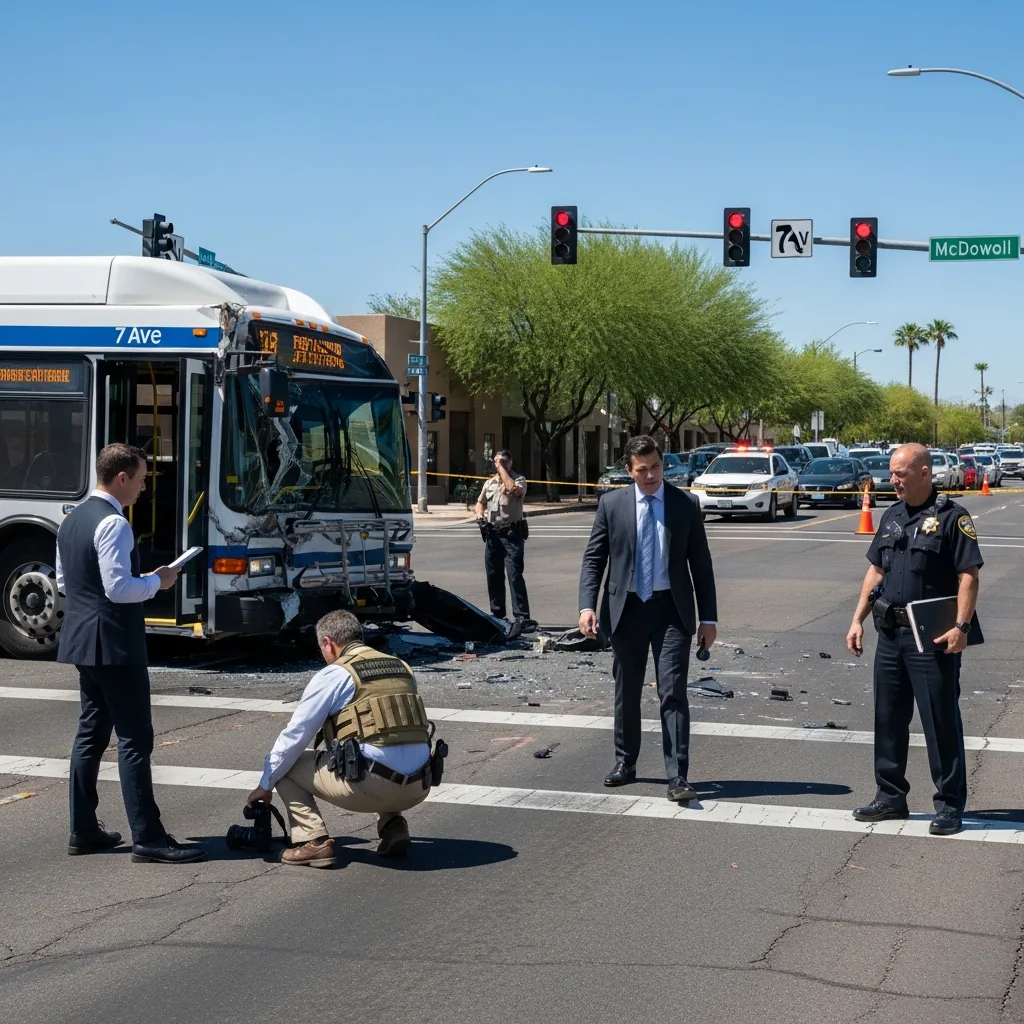
- 7th Street and McDowell Road: A bustling intersection near downtown, known for high traffic volume and complex turn signals.
- 19th Avenue and Northern Avenue: A busy commercial corridor with heavy cross-traffic and pedestrian activity.
- Central Avenue and Thomas Road: Another core intersection with high pedestrian and vehicle traffic, including light rail and bus routes.
- Bell Road and Tatum Boulevard: Located in north Phoenix, this area experiences significant congestion from retail and residential traffic.
- Van Buren Street, particularly through downtown: A major east-west artery with high pedestrian volumes, numerous bus stops, and often, distracted drivers.
These areas pose particular risks for bus accidents due to several factors: the potential for distracted drivers, aggressive driving behaviors, high pedestrian volumes near bus stops, complex traffic signal patterns, and the inherent challenges of maneuvering a large bus in congested environments. Bus drivers must contend with blind spots, longer braking distances, and the need for wide turns, all of which are exacerbated in these high-risk locations. When investigating a bus accident, our team at AccidentLegalForce meticulously examines the accident location, traffic patterns, and any historical data to identify contributing factors and establish clear liability, ensuring that the unique dangers of Phoenix's roads are fully considered in your case.
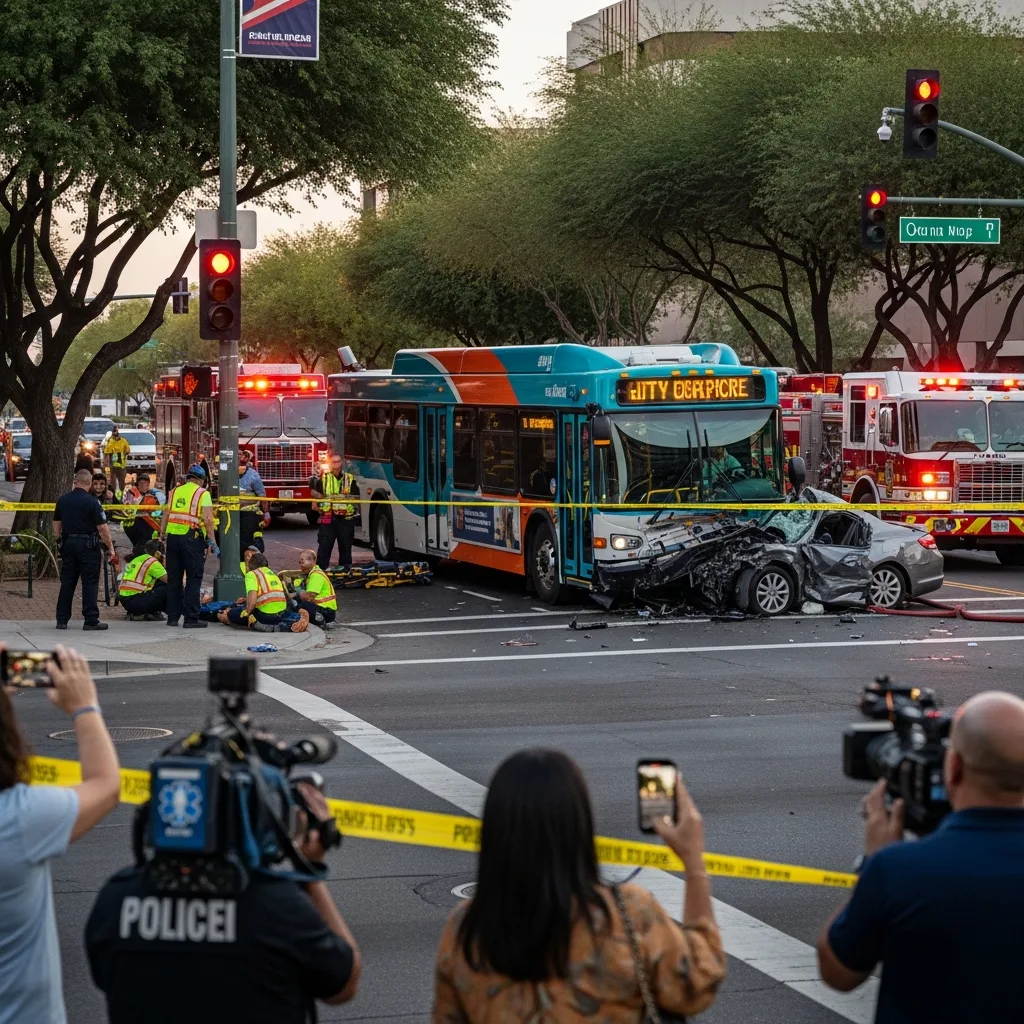
Arizona Bus Accident Laws: Statutes, Fault Rules and Deadlines
Navigating the legal aftermath of a bus accident in Arizona requires a thorough understanding of specific statutes, fault rules, and critical deadlines. These legal intricacies can significantly impact your ability to recover compensation, making expert legal counsel indispensable. In Arizona, bus accident claims are governed by a combination of personal injury law, transportation statutes, and, crucially, specific rules when a government entity is involved.
The fundamental legal framework for personal injury claims in Arizona is established by the Statute of Limitations. For most personal injury cases, including bus accidents involving private entities, Arizona Revised Statutes (A.R.S.) § 12-542 sets a two-year deadline from the date of the injury to file a lawsuit. If you fail to file within this two-year period, you generally lose your right to pursue compensation, regardless of the merits of your case.
However, a critical distinction arises when a governmental entity is involved, which is often the case with public transportation systems like Valley Metro buses or school buses operated by municipal school districts. Under A.R.S. § 12-821.01, you must file a Notice of Claim with the responsible governmental entity within 180 days (approximately six months) of the incident. This is a significantly shorter and more stringent deadline than the general two-year statute of limitations. This notice must be in writing, specifically state the amount for which the claim can be settled, and contain sufficient facts to allow the public entity to understand the basis of the claim. Missing this 180-day window can absolutely bar your claim, even if you are well within the two-year general statute of limitations. This dual deadline underscores the absolute necessity of contacting a Phoenix bus accident attorney immediately after an incident.
Arizona also operates under a system of Pure Comparative Negligence, as outlined in A.R.S. § 12-2505. This rule dictates how damages are apportioned when multiple parties, including the injured party, share some degree of fault for an accident. Under pure comparative negligence, an injured party can still recover damages even if they are partially at fault for the accident, up to 99%. However, the total amount of compensation they receive will be reduced proportionally to their percentage of fault. For example, if a jury determines you suffered $100,000 in damages but were 20% at fault, your recoverable compensation would be reduced to $80,000. This rule is particularly relevant in bus accidents where passengers might contribute to their injuries (e.g., failing to use available handholds) or other drivers might share some blame.
Beyond these general principles, bus accidents involve specific statutes related to common carriers and vehicle operation. Buses, especially those transporting passengers for hire, are often considered common carriers and are held to a higher standard of care than typical drivers. This means they are expected to exercise the highest degree of care, diligence, and foresight for the safety of their passengers. Arizona Revised Statutes, particularly Title 28 (Transportation) and Title 40 (Corporations and Associations), contain provisions that apply to the operation, maintenance, and safety requirements of commercial vehicles, including buses. Furthermore, if the bus operates interstate, federal regulations from the Federal Motor Carrier Safety Administration (FMCSA) will also apply, imposing strict rules on driver hours, vehicle maintenance, and safety inspections.
Regarding insurance minimums, while private vehicle owners in Arizona must carry at least $15,000 per person/$30,000 per accident for bodily injury and $10,000 for property damage (A.R.S. § 28-4009), commercial buses, especially those operated by large companies or municipal entities, are required to carry significantly higher liability coverage—often in the millions of dollars. This substantial coverage is a testament to the catastrophic potential of bus accidents and makes these cases financially complex. Our Phoenix bus accident attorneys are adept at identifying all potential sources of insurance coverage and navigating the complex claims processes to ensure our clients receive the full compensation they are entitled to under Arizona law. Adhering to these strict legal frameworks is paramount, and our firm provides the expertise necessary to protect your rights and pursue your claim effectively.
Common Injuries from Bus Accident Accidents in Phoenix
Bus accidents in Phoenix, by their very nature, often lead to severe and life-altering injuries. The immense size and weight of a bus, combined with the typical lack of safety restraints for passengers (especially in public transit buses), mean that occupants are frequently subjected to violent forces upon impact. Pedestrians or occupants of smaller vehicles struck by a bus face an even higher risk of devastating trauma. Understanding the common types of injuries and their long-term implications is crucial for assessing the full scope of damages in a bus accident claim.
One of the most concerning and frequent injuries stemming from bus collisions is Traumatic Brain Injury (TBI). Even a seemingly minor jolt can result in a concussion, while more severe impacts can cause contusions, skull fractures, or diffuse axonal injury. Symptoms of TBI range from headaches, dizziness, and memory problems to profound cognitive, emotional, and physical impairments that can permanently alter a person's life. Victims may require extensive neurological care, cognitive therapy, and ongoing support for years, if not for life.
Spinal Cord Injuries are also devastatingly common. The sudden force of a bus crash can lead to herniated discs, fractured vertebrae, or direct damage to the spinal cord itself. These injuries can result in chronic pain, nerve damage, and, in the most severe cases, partial or complete paralysis (paraplegia or quadriplegia). The long-term impact of a spinal cord injury includes a lifetime of medical care, physical therapy, assistive devices, and often, a complete change in lifestyle and earning capacity.
Fractures are another prevalent injury, affecting various parts of the body. Passengers thrown against hard surfaces or other passengers, or those pinned in wreckage, often suffer compound fractures of limbs, pelvic fractures, or broken ribs. These injuries frequently require multiple surgeries, prolonged immobilization, and extensive rehabilitation to regain function. The recovery process can be excruciatingly painful and lead to permanent limitations in movement or chronic discomfort.
While often underestimated, Soft Tissue Injuries like whiplash, sprains, and strains can be incredibly debilitating. Whiplash, a common neck injury from rapid back-and-forth motion, can lead to chronic pain, headaches, and limited range of motion. Ligament tears in knees, shoulders, or other joints may require surgical repair and lengthy physical therapy. These injuries can severely impact a person's ability to perform daily tasks, work, or enjoy recreational activities.
In severe bus accidents, particularly those involving fuel leaks or electrical fires, Burns can occur. These injuries range from first-degree to catastrophic third-degree burns, requiring specialized burn unit care, skin grafts, and extensive reconstructive surgeries. The physical and emotional scars from burn injuries are often permanent. Internal injuries, such as organ damage or internal bleeding, may not be immediately apparent but can be life-threatening and require emergency surgery.
Beyond the physical trauma, bus accident victims often endure profound Psychological Trauma, including Post-Traumatic Stress Disorder (PTSD). The shock and horror of the event can lead to anxiety, depression, nightmares, flashbacks, and a persistent fear of vehicles or public transportation. These emotional wounds can be as debilitating as physical injuries, requiring psychological counseling and medication for long-term recovery.
The treatment costs for these severe injuries are astronomical, encompassing emergency medical care, hospitalization, multiple surgeries, extensive rehabilitation (physical, occupational, and speech therapy), long-term medication, and specialized medical equipment. Furthermore, victims often face a significant long-term impact on their lives, including loss of earning capacity, permanent disability, chronic pain, reduced quality of life, and the need for ongoing care and support. In Phoenix, major trauma centers like Banner – University Medical Center Phoenix, HonorHealth John C. Lincoln Medical Center, and St. Joseph's Hospital and Medical Center are equipped to handle such severe injuries. Our Phoenix bus accident attorneys work closely with medical experts to fully document the extent of your injuries, project future medical needs, and ensure that all aspects of your physical and psychological suffering are comprehensively addressed in your claim, securing the compensation necessary for a lifetime of recovery.

Compensation Available for Phoenix Bus Accident Victims
When you're injured in a bus accident in Phoenix, understanding the full scope of compensation available under Arizona law is paramount. The goal of a personal injury claim is to make the victim whole again, as much as possible, by compensating them for all losses incurred due to the at-fault party's negligence. This compensation typically falls into two main categories: economic damages and non-economic damages, with punitive damages being a rare third category.
Economic Damages, also known as "special damages," are tangible, calculable financial losses that can be objectively proven with documentation. These are the direct monetary costs you incur as a result of the bus accident and include:
- Medical Bills: This covers all past and future medical expenses related to your injuries. This includes emergency room visits, ambulance fees, hospital stays, surgeries, doctor appointments, prescription medications, diagnostic tests (X-rays, MRIs, CT scans), physical therapy, occupational therapy, psychological counseling, and any specialized medical equipment or assistive devices. Future medical costs, often projected by medical experts, are a significant component, especially for long-term or permanent injuries.
- Lost Wages: Compensation for income you have lost from being unable to work due to your injuries, both in the past and projected into the future. This includes your regular salary, bonuses, commissions, and any other employment benefits.
- Loss of Earning Capacity: If your injuries are so severe that they permanently diminish your ability to work at your previous capacity or pursue your chosen career, you can claim damages for the reduction in your future earning potential. This is often calculated with the help of vocational and economic experts.
- Property Damage: If your personal property, such as your vehicle (if you were in another car), a laptop, or other belongings were damaged or destroyed in the bus accident, you are entitled to compensation for repair or replacement costs.
- Out-of-Pocket Expenses: Any other verifiable costs directly related to your injury, such as transportation to medical appointments, childcare expenses while you are recovering, or modifications to your home or vehicle to accommodate a disability.
Non-Economic Damages, also referred to as "general damages," are subjective losses that are not easily quantifiable with a specific dollar amount but profoundly impact your quality of life. These include:
- Pain and Suffering: This encompasses the physical pain and discomfort you have endured and will continue to endure, as well as the emotional anguish, stress, and mental suffering caused by your injuries.
- Emotional Distress: Compensation for the psychological impact of the accident, such as anxiety, depression, fear, shock, and grief. This is particularly relevant in traumatic bus accidents.
- Loss of Enjoyment of Life: If your injuries prevent you from participating in hobbies, recreational activities, or daily activities that you once enjoyed, you can seek compensation for this diminished quality of life.
- Loss of Consortium: In cases where a spouse is severely injured, their uninjured partner may claim damages for the loss of companionship, affection, intimacy, and household services.
- Disfigurement and Scarring: If the accident resulted in permanent scarring, disfigurement, or amputation, compensation can be sought for the physical and emotional impact of these changes.
- Permanent Impairment or Disability: If your injuries result in a permanent physical or mental limitation, you can be compensated for the lifelong impact on your independence and well-being.
Punitive Damages are a distinct category and are rarely awarded in Arizona personal injury cases. Under A.R.S. § 12-2503, punitive damages are not intended to compensate the victim but rather to punish the at-fault party for exceptionally egregious conduct and to deter similar behavior in the future. To be awarded punitive damages, the plaintiff must prove by clear and convincing evidence that the defendant acted with an "evil mind" – meaning they engaged in gross negligence, malice, fraud, or oppressive conduct with a conscious disregard for the rights or safety of others. For example, if a bus company knowingly operated a bus with severe, unaddressed maintenance issues that led to a crash, or if a driver was operating under the influence with a history of such behavior, punitive damages might be considered.
Settlement Ranges for bus accident cases in Phoenix vary dramatically, as each case is unique. Factors influencing the potential value of a claim include the severity and permanence of injuries, the clarity of liability, the total amount of economic damages, the strength of available evidence, the insurance policy limits of the at-fault party, and the jurisdiction where the case would be tried (e.g., Maricopa County Superior Court). While some cases may settle for tens of thousands, severe injury or wrongful death claims can reach millions. Our experienced Phoenix bus accident attorneys at AccidentLegalForce meticulously evaluate all these factors to aggressively pursue the maximum possible compensation you deserve, whether through skilled negotiation or tenacious litigation. If a fatality occurs, Arizona law (A.R.S. § 12-612) allows surviving family members to pursue a Wrongful Death Claim, seeking compensation for funeral expenses, medical bills, loss of companionship, and loss of financial support.
How Our Phoenix Bus Accident Attorney Team Handles Your Case
Dealing with the aftermath of a bus accident in Phoenix is a traumatic experience, and the legal process should not add to your burden. At AccidentLegalForce, our dedicated Phoenix bus accident attorney team is committed to handling every aspect of your case with professionalism, empathy, and relentless advocacy. From the moment you contact us, we streamline the process, allowing you to focus on your recovery while we meticulously build and pursue your claim.
The first step in our process is always a Free, No-Obligation Consultation. During this initial meeting, we listen to your story, understand the details of the accident, assess your injuries, and provide an honest evaluation of your legal options. This is your opportunity to ask questions, and for us to explain the legal landscape and how we can help, all without any upfront cost or commitment. We understand the urgency, especially with strict Arizona deadlines like the 180-day notice of claim against governmental entities.
Following the consultation, if you choose AccidentLegalForce to represent you, we immediately launch a Thorough and Comprehensive Investigation. This phase is critical for establishing liability and proving the full extent of your damages. Our investigation typically involves:
- Gathering Evidence: We obtain official accident reports from the Phoenix Police Department or ADOT, witness statements, and, crucially, bus-specific evidence. This includes the bus company's maintenance logs, driver history records, black box data (which records speed, braking, and other operational data), and any available surveillance footage from the bus itself, traffic cameras, or nearby businesses. We also meticulously collect all your medical records, bills, and prognoses.
- Identifying All Liable Parties: Bus accidents are complex. We identify not only the bus driver but also the bus company, the municipal entity (e.g., City of Phoenix, Valley Metro), the school district, or even the bus manufacturer if a defect contributed to the crash. Each party may have different insurance policies and legal responsibilities.
- Assessing Injury Severity and Long-Term Impact: We work closely with your medical providers and, if necessary, enlist medical experts to fully understand the nature, severity, and long-term implications of your injuries, including future medical needs and lost earning capacity. We may also engage accident reconstruction experts to provide a clear picture of how the crash occurred.
Once we have a comprehensive understanding of your case, we craft a compelling Demand Letter. This detailed document is sent to the at-fault party's insurance company or legal representation, outlining the specifics of the accident, their client's liability, the full extent of your injuries and damages (economic and non-economic), and the compensation we seek on your behalf. This letter is backed by all the evidence gathered during our investigation.
The next critical phase is Negotiation. Our skilled attorneys engage directly with insurance adjusters and opposing counsel. We leverage our experience and the strength of your case to negotiate aggressively for a fair settlement that fully compensates you for your losses. It's important to note that insurance companies are often motivated to settle cases out of court to avoid the costs and risks of litigation. Our strong reputation and readiness to go to trial often put pressure on them to offer a just settlement.
While most bus accident cases resolve through negotiation, if a fair settlement cannot be reached, our team is fully prepared to proceed with Litigation (Filing a Lawsuit). This involves:
- Filing a Complaint: We initiate a lawsuit in the appropriate court, typically the Maricopa County Superior Court, formally notifying the at-fault parties of your claim.
- Discovery: This phase involves exchanging information with the opposing side, including depositions (sworn testimonies), interrogatories (written questions), and requests for documents.
- Mediation/Arbitration: Many courts require or encourage alternative dispute resolution methods before trial, where a neutral third party helps facilitate a settlement.
- Trial: If all other avenues fail, we will represent you vigorously in court, presenting your case to a jury or judge, advocating for your rights and seeking a favorable verdict.
Regarding the Timeline, bus accident cases in Phoenix can vary significantly in duration. Simpler cases with clear liability and moderate injuries might resolve within 6-12 months. However, complex cases involving severe injuries, multiple liable parties, governmental entities, or those that proceed to litigation can take anywhere from 1 to 3+ years to reach a resolution. Throughout this entire process, our team maintains open and consistent communication with you, ensuring you are informed at every stage and empowering you to make well-informed decisions about your case. We handle all the legal burdens, allowing you to focus on your physical and emotional recovery.

Why Choose AccidentLegalForce in Phoenix
Choosing the right legal representation after a bus accident in Phoenix is one of the most critical decisions you will make. At AccidentLegalForce, we understand the profound impact such an event can have on your life, and we are dedicated to providing the highest caliber of legal service with a client-focused approach. Our firm stands apart through a combination of unwavering commitment, specialized expertise, and a proven track record of success in securing justice for bus accident victims across Arizona.
One of the most significant reasons to choose AccidentLegalForce is our Contingency Fee Basis. We firmly believe that quality legal representation should be accessible to everyone, regardless of their financial situation after an accident. This means you pay no upfront costs for our services. Our fees are contingent upon us winning your case. If we don't secure compensation for you, you owe us nothing. This "No Win, No Fee Guarantee" allows you to pursue justice without the added financial stress, knowing that our interests are fully aligned with yours—we only get paid when you do. This arrangement is governed by Arizona Revised Statutes (A.R.S.) § 12-341.01 for attorneys' fees.
Our team boasts Extensive Trial Experience, a crucial differentiator in the personal injury landscape. While many cases settle out of court, the willingness and ability of your attorney to take a case to trial can significantly influence settlement offers. Insurance companies and opposing counsel know which firms are prepared to fight aggressively in the courtroom. Our reputation as formidable litigators means we are not afraid to stand up to well-funded bus companies or governmental entities. We prepare every case as if it will go to trial, ensuring that we are always ready to advocate fiercely for your rights before a judge and jury if a fair settlement cannot be reached. This readiness often strengthens our position during negotiations, compelling the other side to offer more equitable compensation.
We possess Deep Understanding of Arizona Law and specific Local Court Knowledge that is invaluable in bus accident cases. Navigating the unique legal landscape of Arizona, including the complex 180-day notice of claim requirement for governmental entities (Valley Metro, school districts), the intricacies of pure comparative negligence, and specific common carrier regulations, requires specialized expertise. Our attorneys are intimately familiar with the Maricopa County Superior Court system, its judges, local court procedures, and the tactics commonly employed by opposing counsel in Phoenix. This local insight allows us to anticipate challenges, strategize effectively, and present your case in the most compelling manner within the specific judicial environment of the Valley.
AccidentLegalForce also provides unparalleled Resources and Expertise. We have cultivated a vast network of trusted professionals, including accident reconstructionists, medical experts, vocational specialists, and economic analysts, who can provide crucial testimony and analysis to strengthen your claim. These resources are essential for accurately calculating the full extent of your economic and non-economic damages, from future medical costs to loss of earning capacity. We invest in these experts because we are committed to building the strongest possible case for every client.
At our core, we are a Client-Centered firm. We understand that you are not just a case number; you are an individual suffering from physical pain, emotional trauma, and financial distress. We approach every client with empathy, compassion, and personalized attention. We handle all the legal complexities, paperwork, and communications with insurance companies, allowing you to focus on your recovery. Our team is dedicated to providing clear, consistent communication, keeping you informed at every stage, and being available to answer your questions.
Finally, we understand that accidents don't adhere to business hours. That's why AccidentLegalForce offers 24/7 Availability. We are here to provide immediate guidance and support when you need it most, ensuring that critical evidence is preserved and important deadlines are not missed. Choosing AccidentLegalForce means choosing a relentless advocate with the expertise, resources, and dedication to fight for the maximum compensation you deserve, helping you rebuild your life after a bus accident in Phoenix.

What to Do After a Bus Accident in Phoenix
The moments immediately following a bus accident in Phoenix can be chaotic and disorienting. However, the actions you take (or don't take) in the aftermath can significantly impact your health, safety, and the strength of any future legal claim. It's crucial to prioritize your well-being and then take specific steps to protect your rights and gather vital information.
1. Prioritize Safety and Seek Immediate Medical Attention:
- Call 911 Immediately: Even if you feel your injuries are minor, contact the Phoenix Police Department and Phoenix Fire Department. Emergency responders will secure the scene, direct traffic, and create an official accident report. Paramedics will assess injuries and provide immediate medical care.
- Move to Safety (if possible): If you are able to move and it is safe to do so, get away from the immediate area of the accident to avoid further injury from traffic or other hazards.
- Accept Medical Evaluation: Even if you feel okay, allow paramedics to examine you. Adrenaline can mask pain, and some serious injuries, like concussions or internal bleeding, may not manifest symptoms immediately.
- Go to the ER or Doctor: If paramedics advise it, or if you begin to feel pain later, seek prompt medical attention at a local emergency room (e.g., Banner – University Medical Center Phoenix) or urgent care clinic. Delays in seeking medical care can not only harm your health but also be used by insurance companies to argue that your injuries were not caused by the accident.
- Follow All Medical Advice: Diligently follow your doctor's orders, attend all follow-up appointments, and complete any prescribed therapies. This is vital for your recovery and for documenting the severity of your injuries.
2. Document the Scene and Gather Information (if safe and able):
- Take Photos and Videos: Use your phone to document everything. Capture images of:
- Damage to the bus and any other vehicles involved.
- Your injuries (bruises, cuts, swelling).
- The accident scene from multiple angles (skid marks, debris).
- Street signs, traffic signals, road conditions, and weather.
- Any visible identifying numbers or names on the bus.
- Identify the Bus: Note the bus number, route number, bus company name (e.g., Valley Metro, school district name, private charter company), and any other
Compensation You May Be Entitled To
Bus Accident Statistics in Arizona
Understanding the scope of bus accident accidents in Arizona helps victims know they are not alone — and why aggressive legal representation matters.
Recent Bus Accident Settlements in Phoenix
These are representative results. Past results don't guarantee future outcomes.
Why Phoenix Victims Choose AccidentLegalForce
When you are searching for a bus accident attorney in Phoenix, you need more than just a lawyer — you need a fighter. Here is what sets us apart from other Arizona personal injury firms:
Zero upfront costs. We only get paid when you do. This means we are 100% motivated to maximize your settlement.
We start building your case the moment you call. Evidence disappears fast — we preserve it before it is gone.
Our attorneys know Arizona courts, judges, and insurance company tactics. We use this insider knowledge to win.
Your attorney is available 24/7. No waiting days for callbacks. Phoenix clients get direct access to their legal team.
⚠️ Insurance Company Tactics to Watch Out For
Insurance adjusters in Arizona are trained to minimize your payout. After a bus accident in Phoenix, watch out for these common tactics:
- Recorded statements — They will ask for a recorded statement early to use your words against you
- Quick lowball offers — An early settlement offer is almost always far below what your case is worth
- Delaying tactics — Stalling until Arizona's statute of limitations runs out
- Disputing medical treatment — Claiming your injuries were pre-existing or unnecessary
- Surveillance — Hiring investigators to find reasons to deny your claim
Do not face this alone. Call AccidentLegalForce immediately after your bus accident in Phoenix.
Frequently Asked Questions
How much does a bus accident attorney cost in Phoenix?
At AccidentLegalForce, we work on a contingency fee basis — you pay nothing unless we win your case. This means zero upfront costs for Phoenix accident victims.
How long do I have to file a bus accident claim in Arizona?
Arizona has a statute of limitations for personal injury claims. It's critical to contact a bus accident attorney in Phoenix as soon as possible to preserve evidence and meet all legal deadlines.
What compensation can I recover after a bus accident in Phoenix?
Victims of bus accident accidents in Phoenix may be entitled to medical expenses, lost wages, pain and suffering, property damage, and more. Our attorneys maximize every dollar of your claim.